Cybersecurity insights from The AI Summit New York 2025

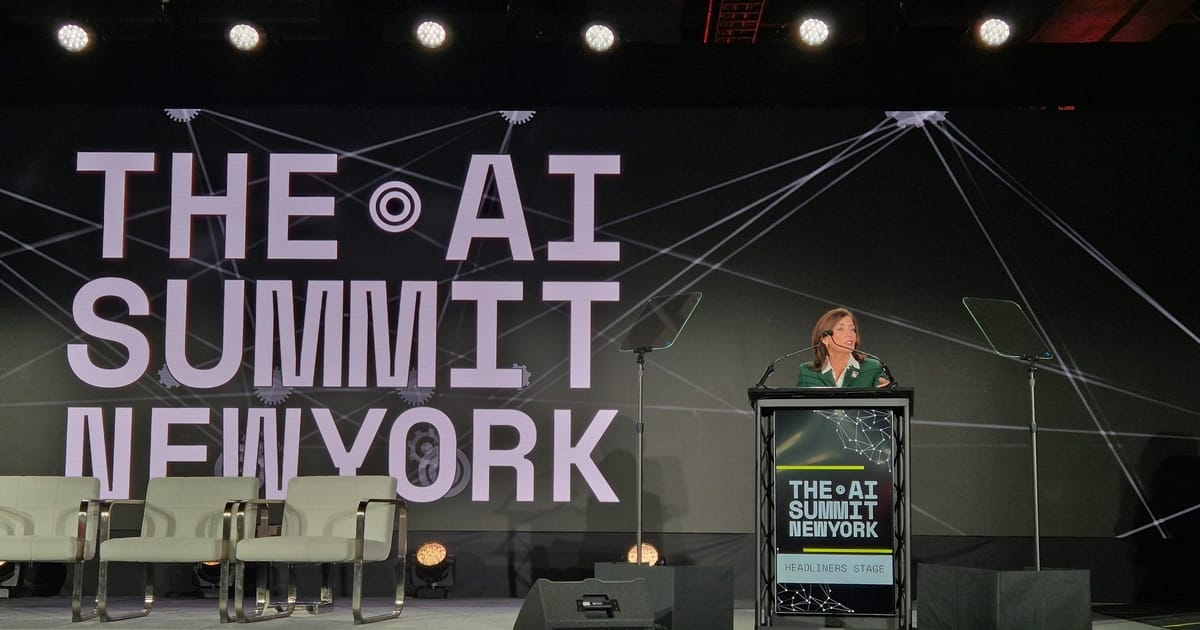
As artificial intelligence continues to reshape the enterprise, its convergence with cybersecurity was front and center at The AI Summit New York 2025, held this December. Bringing together thought leaders, innovators, CISOs, and AI researchers from around the world, the summit offered sharp perspectives on both the opportunities and risks AI presents for security in 2026 and beyond.
This article recaps the most important cybersecurity takeaways from the event—and how forward-thinking organizations can act now.
1. AI is transforming both offense and defense
One of the strongest messages from the summit was clear: AI is a double-edged sword in cybersecurity.
On the defensive side, we’re seeing rapid gains in:
- Threat detection and classification using large language models (LLMs) and behavior-based learning
- Autonomous response systems capable of isolating malicious activity in real time
- Enhanced user and entity behavior analytics (UEBA) for insider threat mitigation
- Anomaly detection in API traffic, cloud workloads, and identity systems
But equally concerning, offensive actors are weaponizing AI to:
- Launch hyper-personalized phishing attacks using generative models
- Automate reconnaissance, lateral movement, and privilege escalation
- Evade detection by adapting to EDR/XDR rule sets dynamically
- Generate deepfake content for disinformation and social engineering
Key insight: Cybersecurity strategies must evolve beyond traditional rules and signatures. Organizations must now focus on AI-to-AI combat, where both attackers and defenders are leveraging machine intelligence.
2. LLMs are breaking traditional security boundaries
Panels and workshops throughout the summit warned of the unintended security risks posed by the integration of large language models into business systems.
Key risks identified:
- Prompt injection attacks to hijack AI-based workflows
- Leakage of sensitive or proprietary data through poorly governed LLMs
- Lack of visibility into model behavior (“black-box” vulnerabilities)
- Supply chain risks when relying on third-party model APIs
- Use of LLMs to reverse-engineer code or security mechanisms
The consensus was that model security and interpretability are urgent priorities. CISOs are now expected to work alongside AI/ML teams to develop AI governance frameworks, enforce secure-by-design principles, and conduct adversarial testing of LLM-powered systems.
3. Deepfake detection is now a business-critical skill
With the accessibility of open-source video generation tools and synthetic voice software, the barriers to creating realistic deepfakes have vanished.
From fake CEO video calls to manipulated audio used in spear phishing, summit experts showcased real-world examples where deepfakes were successfully used to bypass:
- Identity verification systems
- Internal approval processes
- Voice-based authentication
- Executive impersonation controls
Cybersecurity teams must now treat deepfake detection as part of their standard SOC and fraud prevention toolkit. Expect to see more adoption of real-time biometric verification, multi-channel identity validation, and watermarking technologies in 2026.

4. Secure AI development must go beyond compliance
Another key theme was the push for secure AI engineering practices. As AI systems become embedded in core business operations, securing them requires:
- Threat modeling specific to AI/ML pipelines
- Validation of training data integrity
- Robust access control on model endpoints
- Logging and monitoring of inference activity
- Secure storage and transmission of model weights and outputs
Speakers emphasized that regulatory frameworks like the EU AI Act and U.S. executive orders are just the baseline. Security must be integrated at every layer of the AI lifecycle—from data collection and training to deployment and post-production monitoring.
5. AI-driven SOCs are no longer experimental—they’re essential
Many sessions highlighted a significant shift: Security Operations Centers (SOCs) are now being redesigned around AI-powered workflows, rather than simply integrating AI as a support layer.
This includes:
- Automated Tier 1 alert triage using LLMs
- Contextual enrichment of alerts from multiple sources
- Natural language querying for threat hunting and log analysis
- Playbook creation using AI suggestions
- Auto-generated incident summaries for faster reporting
Organizations with AI-augmented SOCs report higher MTTR efficiency, reduced alert fatigue, and more accurate incident prioritization. The Summit made it clear: in 2026, AI-native SOCs will become a benchmark of security maturity.
Final thoughts: AI will reshape security, but strategy must come first
The AI Summit New York 2025 left no doubt—AI is changing the rules of cybersecurity. While the technology offers unmatched advantages in detection, automation, and scalability, it also introduces new attack surfaces and operational risks.
To stay ahead, security leaders must:
✅ Build cross-functional teams with cybersecurity and AI/ML expertise
✅ Invest in adversarial testing of AI-powered systems
✅ Develop clear AI governance and incident response protocols
✅ Prioritize offensive security to simulate AI-enabled threats
✅ Ensure visibility and control over model behavior and data flows
How AcaciaSec helps you prepare for an AI-powered threat landscape
At AcaciaSec, we’ve been testing, simulating, and preparing for AI-augmented attacks for years. Our Red Team engagements now include agentic AI adversary simulations, synthetic identity abuse scenarios, and evasion testing for LLM-integrated environments.
We help organizations:
- Identify weaknesses in AI-driven workflows
- Simulate advanced AI-based phishing and lateral movement
- Validate SOC response to synthetic content attacks
- Strengthen governance over internal and external models
- Prepare for NIS2, EU AI Act, and Secure-by-Design mandates
Need to test your defenses against tomorrow’s AI threats—today?
Let’s build your strategy together.